这些单词通常根据不同的主题(单元)进行划分,方便孩子分类记忆,我会列出单词、音标、中文意思,并提供一些例句和记忆小贴士,帮助孩子更好地理解和运用。
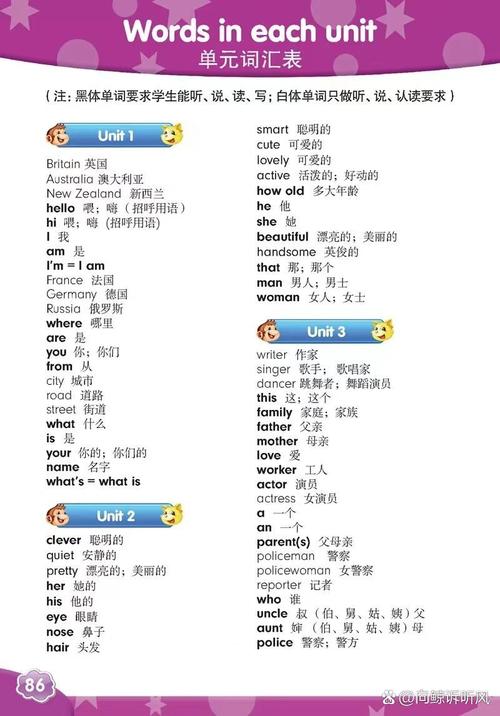
(图片来源网络,侵删)
第一单元:星期与课程安排
这个单元主要围绕一周七天和学校课程展开。
| 单词 | 音标 | 中文意思 | 例句 |
|---|---|---|---|
| Monday | /ˈmʌndeɪ/ | 星期一 | I have math on Monday. (我星期一有数学课。) |
| Tuesday | /ˈtjuːzdeɪ/ | 星期二 | It's Tuesday today. (今天是星期二。) |
| Wednesday | /ˈwenzdeɪ/ | 星期三 | We have art on Wednesday. (我们星期三有美术课。) |
| Thursday | /ˈθɜːzdeɪ/ | 星期四 | My birthday is on Thursday. (我的生日在星期四。) |
| Friday | /ˈfraɪdeɪ/ | 星期五 | I love Friday! (我喜欢星期五!) |
| Saturday | /ˈsætədeɪ/ | 星期六 | I play football on Saturday. (我星期六踢足球。) |
| Sunday | /ˈsʌndeɪ/ | 星期日 | I go to church on Sunday. (我星期日去教堂。) |
| weekend | /ˌwiːkˈend/ | 周末 | I often watch TV on the weekend. (我周末经常看电视。) |
| class | /klɑːs/ | 课程;班级 | We have three classes this morning. (我们今天上午有三节课。) |
| PE | /ˌpiːˈiː/ | 体育 (Physical Education的缩写) | What do you have on Mondays? — We have PE. (你星期一有什么课?——我们有体育课。) |
| music | /ˈmjuːzɪk/ | 音乐 | She likes music class. (她喜欢音乐课。) |
| art | /ɑːrt/ | 美术 | He is good at art. (他擅长美术。) |
| Chinese | /ˌtʃaɪˈniːz/ | 语文;中文 | My Chinese teacher is very kind. (我的语文老师很和蔼。) |
| math | /mæθ/ | 数学 | Math is my favorite subject. (数学是我最喜欢的科目。) |
| English | /ˈɪŋɡlɪʃ/ | 英语 | I can speak a little English. (我会说一点英语。) |
| science | /ˈsaɪəns/ | 科学 | We do experiments in science class. (我们在科学课上做实验。) |
记忆小贴士:
- 星期歌:可以教孩子唱《The Days of the Week Song》来记忆星期。
- 课程分类:可以把单词按“喜欢的科目”和“不喜欢的科目”进行分类,并用 "I like..." 或 "I don't like..." 来造句,增加趣味性。
第二单元:食物与健康
这个单元围绕食物、三餐和健康习惯展开。
| 单词 | 音标 | 中文意思 | 例句 |
|---|---|---|---|
| healthy | /ˈhelθi/ | 健康的 | An apple is a healthy food. (苹果是健康的食物。) |
| unhealthy | /ʌnˈhelθi/ | 不健康的 | Candy is unhealthy. (糖果是不健康的。) |
| sweet | /swiːt/ | 甜的;甜食 | I like sweet cakes. (我喜欢甜蛋糕。) |
| sour | /saʊər/ | 酸的 | Lemons are very sour. (柠檬非常酸。) |
| fresh | /freʃ/ | 新鲜的 | These vegetables are fresh. (这些蔬菜很新鲜。) |
| delicious | /dɪˈlɪʃəs/ | 美味的 | My mother's soup is delicious. (我妈妈的汤很美味。) |
| breakfast | /ˈbrekfəst/ | 早餐 | I eat bread and milk for breakfast. (我早餐吃面包和牛奶。) |
| lunch | /lʌntʃ/ | 午餐 | What do you have for lunch? (你午餐吃什么?) |
| dinner | /ˈdɪnər/ | 晚餐 | We have dinner at 7 p.m. (我们晚上7点吃晚餐。) |
| fruit | /fruːt/ | 水果 | I like eating fruit. (我喜欢吃水果。) |
| vegetable | /ˈvedʒtəbl/ | 蔬菜 | You should eat more vegetables. (你应该多吃蔬菜。) |
| juice | /dʒuːs/ | 果汁 | I'd like a glass of orange juice. (我想要一杯橙汁。) |
| ice cream | /ˌaɪs ˈkriːm/ | 冰淇淋 | Children love ice cream. (孩子们喜欢冰淇淋。) |
| egg | /eɡ/ | 鸡蛋 | Boiled eggs are good for you. (煮鸡蛋对你有好处。) |
| bread | /bred/ | 面包 | I like toast for breakfast. (我喜欢早餐吃烤面包。) |
| milk | /mɪlk/ | 牛奶 | Drink more milk. (多喝牛奶。) |
| water | /ˈwɔːtər/ | 水 | We should drink plenty of water. (我们应该多喝水。) |
| hungry | /ˈhʌŋɡri/ | 饿的 | I'm hungry. Let's eat. (我饿了,我们吃饭吧。) |
| thirsty | /ˈθɜːrsti/ | 渴的 | I'm very thirsty. (我非常渴。) |
记忆小贴士:
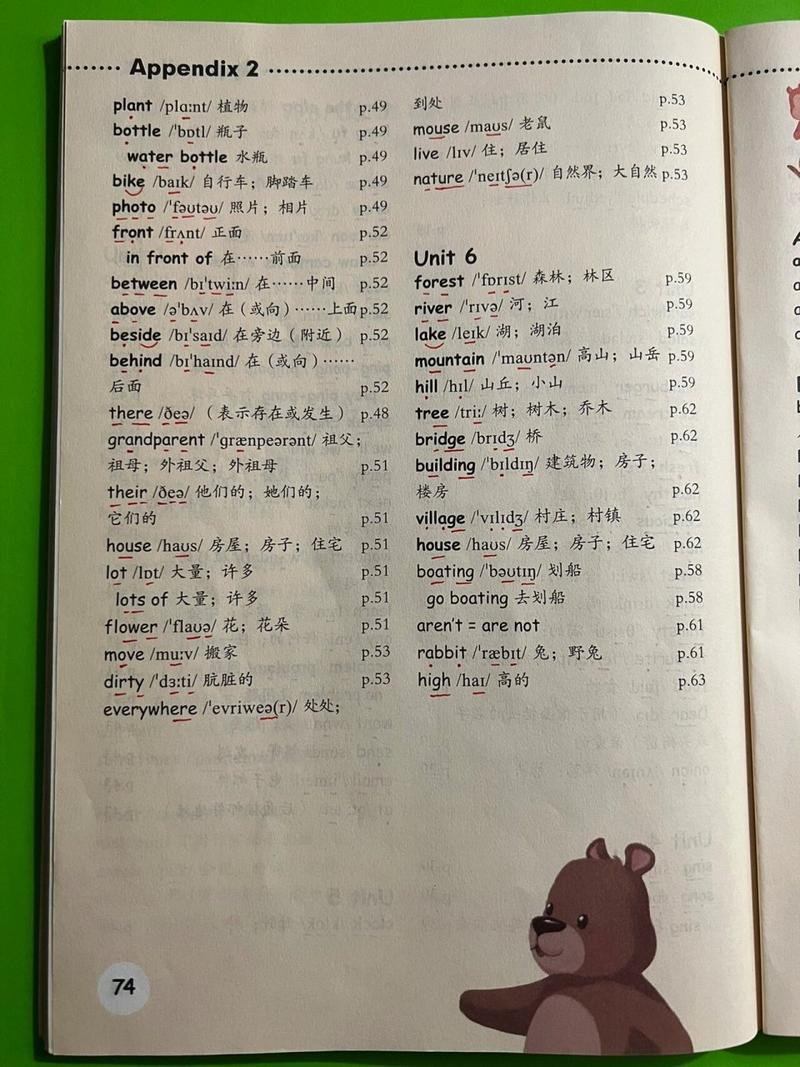
(图片来源网络,侵删)
- 食物分类:将单词分为“健康食物”和“不健康食物”,或者“早餐”、“午餐”、“晚餐”三类。
- 五感记忆:让孩子描述食物的味道,"This apple is sweet." (这个苹果是甜的),"This lemon is sour." (这个柠檬是酸的)。
第三单元:家务劳动与家庭活动
这个单元主要学习家务和家庭活动相关的动词和短语。
| 单词 | 音标 | 中文意思 | 例句 |
|---|---|---|---|
| do the dishes | /duː ðə ˈdɪʃɪz/ | 洗碗 | I help my mom do the dishes. (我帮妈妈洗碗。) |
| set the table | /set ðə ˈteɪbl/ | 摆放餐具 | Can you set the table for dinner? (你能帮忙摆餐具准备晚餐吗?) |
| make the bed | /meɪk ðə bed/ | 整理床铺 | I make my bed every morning. (我每天早上整理我的床铺。) |
| sweep the floor | /swiːp ðə flɔːr/ | 扫地 | He sweeps the floor on weekends. (他周末扫地。) |
| clean the room | /kliːn ðə ruːm/ | 打扫房间 | My sister cleans her room. (我妹妹打扫她的房间。) |
| wash clothes | /wɒʃ ˈkləʊðz/ | 洗衣服 | My grandma washes clothes by hand. (我奶奶手洗衣服。) |
| take out the trash | /teɪk aʊt ðə træʃ/ | 倒垃圾 | I take out the trash every day. (我每天都倒垃圾。) |
| help...with... | /help wɪð/ | 帮助...做... | I help my dad with his work. (我帮助我爸爸工作。) |
| use a computer | /juːz ə kəmˈpjuːtər/ | 使用电脑 | He uses a computer to play games. (他用电脑玩游戏。) |
| read a book | /riːd ə bʊk/ | 读书 | She likes to read a book in the evening. (她喜欢在晚上读书。) |
| watch TV | /wɒtʃ tiːˈviː/ | 看电视 | We watch TV after dinner. (我们晚饭后看电视。) |
| play sports | /pleɪ spɔːrts/ | 做运动 | I often play sports with my friends. (我经常和朋友一起做运动。) |
记忆小贴士:
- 动作模仿:一边念单词,一边做相应的动作,比如念 "sweep the floor" 时就做扫地的动作,加深记忆。
- 情景对话:创建一个“周末家庭大扫除”的情景,让孩子用这些词来描述一家人都在做什么。
第四单元:社区场所与问路
这个单元学习社区里的常见地点以及如何问路和指路。
| 单词 | 音标 | 中文意思 | 例句 |
|---|---|---|---|
| library | /ˈlaɪbreri/ | 图书馆 | I borrow books from the library. (我从图书馆借书。) |
| post office | /ˈpoʊst ˌɔːfɪs/ | 邮局 | I send a letter at the post office. (我在邮局寄信。) |
| hospital | /ˈhɑːspɪtl/ | 医院 | My aunt works in a hospital. (我姑姑在医院工作。) |
| cinema | /ˈsɪnəmə/ | 电影院 | Let's go to the cinema. (我们去看电影吧。) |
| bookstore | /ˈbʊkstɔːr/ | 书店 | I want to buy a new book in the bookstore. (我想在书店买一本新书。) |
| park | /pɑːrk/ | 公园 | Children play in the park. (孩子们在公园里玩。) |
| zoo | /zuː/ | 动物园 | We see many animals at the zoo. (我们在动物园看到很多动物。) |
| supermarket | /ˈsuːpərmɑːrkɪt/ | 超市 | My mom buys food at the supermarket. (我妈妈在超市买食物。) |
| bank | /bæŋk/ | 银行 | My dad goes to the bank. (我爸爸去银行。) |
| near | /nɪr/ | 在...附近 | The park is near my school. (公园在我学校附近。) |
| far | /fɑːr/ | 远的 | My home is far from school. (我家离学校很远。) |
| next to | /nekst tuː/ | 紧挨着... | The library is next to the post office. (图书馆紧挨着邮局。) |
| behind | /bɪˈhaɪnd/ | 在...后面 | The cat is behind the tree. (猫在树后面。) |
| in front of | /ɪn frʌnt əv/ | 在...前面 | The bus stop is in front of the supermarket. (公交站在超市前面。) |
| go straight | /ɡo streɪt/ | 直走 | Go straight and turn left. (直走然后左转。) |
| turn left | /tɜːn left/ | 左转 | Turn left at the corner. (在拐角处左转。) |
| turn right | /tɜːn raɪt/ | 右转 | Turn right, you'll see the hospital. (右转,你就会看到医院。) |
记忆小贴士:
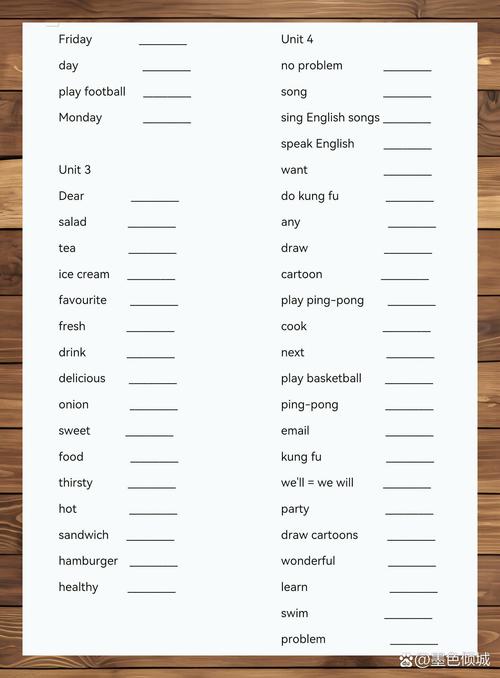
(图片来源网络,侵删)
- 地图游戏:画一张简单的社区地图,标出这些地点,然后玩“寻宝”游戏,让孩子根据指令(如 "Go straight and turn right.")找到正确的地点。
- 方位词:重点记忆
next to,behind,in front of等方位介词,可以用身边的物品来练习。
第五单元:爱好与能力
这个单元谈论兴趣爱好和个人能力,使用 like doing sth. 和 can 的句型。
| 单词 | 音标 | 中文意思 | 例句 |
|---|---|---|---|
| hobby | /ˈhɑːbi/ | 爱好 | My hobby is drawing. (我的爱好是画画。) |
| dance | /dæns/ | 跳舞 | She likes dancing. (她喜欢跳舞。) |
| sing | /sɪŋ/ | 唱歌 | Can you sing? (你会唱歌吗?) |
| swim | /swɪm/ | 游泳 | I can swim very well. (我游泳游得很好。) |
| draw | /drɔː/ | 画画 | He is drawing a picture. (他正在画画。) |
| speak | /spiːk/ | 说;讲 | I can speak English. (我会说英语。) |
| play the piano | /pleɪ ðə piˈænoʊ/ | 弹钢琴 | My sister plays the piano. (我妹妹弹钢琴。) |
| play the violin | /pleɪ ðɪ ˌvaɪəˈlɪn/ | 拉小提琴 | He wants to learn to play the violin. (他想学拉小提琴。) |
| join | /dʒɔɪn/ | 加入 | I want to join the music club. (我想加入音乐俱乐部。) |
| club | /klʌb/ | 俱乐部 | There is a sports club at school. (学校有一个体育俱乐部。) |
| tell stories | /tel ˈstɔːriz/ | 讲故事 | My grandfather tells stories every night. (我爷爷每天晚上都讲故事。) |
| make things | /meɪk θɪŋz/ | 做东西 | She likes making things with paper. (她喜欢用纸做东西。) |
记忆小贴士:
- 个人名片:让孩子制作一张自己的“兴趣名片”,写上 "My name is... My hobby is... I can...",向大家介绍自己。
- 句型操练:重点练习 "I like..." 和 "I can..." 的句型,用不同的爱好和能力进行替换。
第六单元:季节与天气
这个单元学习四季、天气状况以及相关的活动。
| 单词 | 音标 | 中文意思 | 例句 |
|---|---|---|---|
| season | /ˈsiːzn/ | 季节 | There are four seasons in a year. (一年有四个季节。) |
| spring | /sprɪŋ/ | 春天 | I like spring. (我喜欢春天。) |
| summer | /ˈsʌmər/ | 夏天 | It's hot in summer. (夏天很热。) |
| autumn | /ˈɔːtəm/ | 秋天 (美式用 fall) | Leaves fall in autumn. (秋天树叶会落下来。) |
| winter | /ˈwɪntər/ | 冬天 | It's cold in winter. (冬天很冷。) |
| weather | /ˈweðər/ | 天气 | What's the weather like today? (今天天气怎么样?) |
| hot | /hɑːt/ | 热的 | It's a hot day. (今天是个热天。) |
| cold | /koʊld/ | 冷的 | It's very cold outside. (外面非常冷。) |
| warm | /wɔːrm/ | 温暖的 | The weather is warm in spring. (春天的天气很温暖。) |
| cool | /kuːl/ | 凉爽的 | It's cool in autumn. (秋天很凉爽。) |
| rainy | /ˈreɪni/ | 下雨的 | It's a rainy day. (下雨天。) |
| sunny | /ˈsʌni/ | 晴朗的 | It's sunny today. (今天天气晴朗。) |
| cloudy | /ˈklaʊdi/ | 多云的 | The sky is cloudy. (天空多云。) |
| windy | /ˈwɪndi/ | 有风的 | It's windy. Let's fly a kite. (有风,我们去放风筝吧。) |
| snowy | /ˈsnoʊi/ | 下雪的 | It's snowy in winter. (冬天会下雪。) |
| go swimming | /ɡo ˈswɪmɪŋ/ | 去游泳 | We go swimming in summer. (我们夏天去游泳。) |
| make a snowman | /meɪk ə ˈsnoʊmæn/ | 堆雪人 | We make a snowman in winter. (我们冬天堆雪人。) |
| pick apples | /pɪk ˈæplz/ | 摘苹果 | We pick apples in autumn. (我们秋天摘苹果。) |
| plant trees | /plænt triːz/ | 种树 | We plant trees in spring. (我们春天种树。) |
记忆小贴士:
- 天气符号:让孩子画出每种天气的符号(如太阳代表sunny,云朵代表cloudy),并和单词对应起来。
- 季节与活动:将每个季节和相应的活动联系起来,形成一个完整的知识链,如 "Spring -> plant trees"。
学习建议
- 分类记忆:按照单元或主题(如食物、地点、活动)来记忆单词,效果会更好。
- 多听多读:利用课本配套的录音、动画片或英文儿歌,让孩子熟悉单词的发音。
- 情景运用:鼓励孩子在日常生活中使用这些单词,比如吃饭时说 "I'm hungry.",看到公园时说 "Look! It's a park."
- 制作单词卡:正面写英文,反面写中文和图画,随时拿出来复习。
- 保持兴趣:用游戏、竞赛等方式激发孩子的学习兴趣,避免死记硬背。
希望这份详细的单词列表和学习建议能帮助您的孩子更好地学习五年级英语!