小学英语三年级下册全册教学规划与教案示例
全册教学目标
-
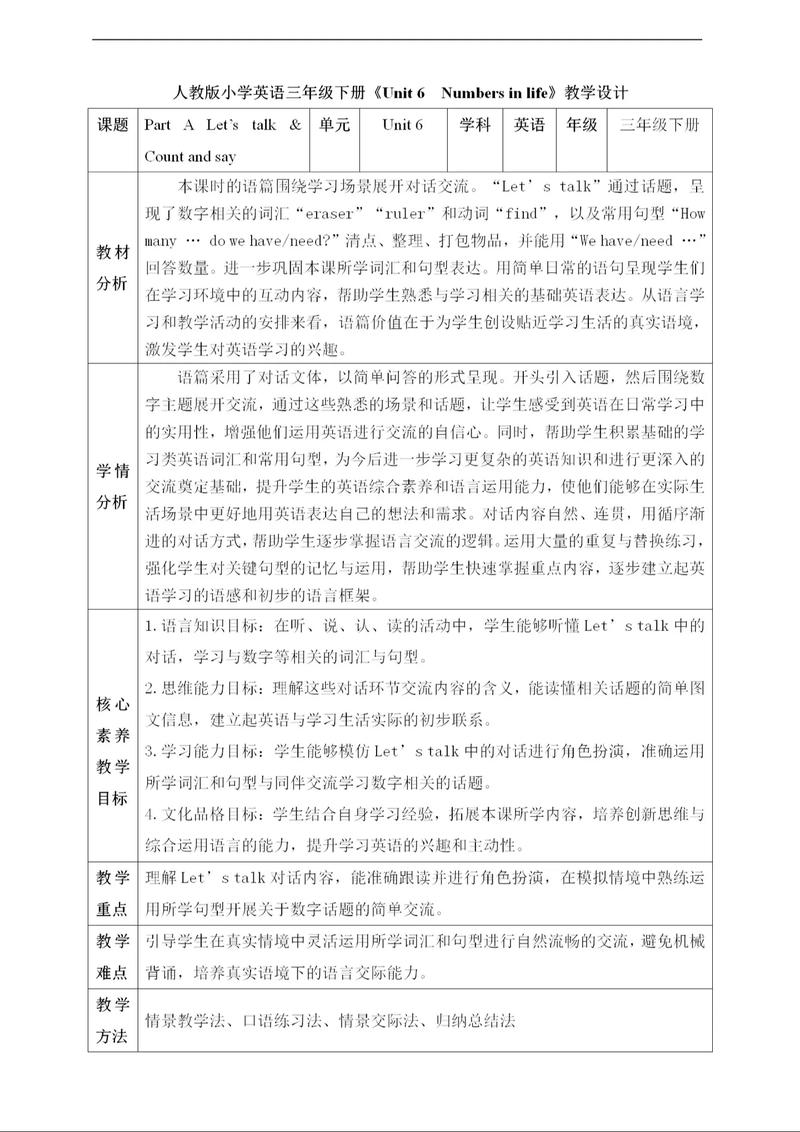
知识与技能:
 (图片来源网络,侵删)
- 词汇: 能听、说、认读、拼写约 60-80 个新单词,并能运用这些单词描述人物、动物、食物、地点和日常活动。
- 句型: 能听懂、会说、会读、会用以下核心句型进行简单交流:
- 问候与告别:
Hello! / Hi! / Goodbye. / See you. - 介绍他人:
This is... / He/She is... - 询问与回答姓名:
What's your/his/her name? My/His/Her name is... - 询问与回答年龄:
How old are you? I'm... years old. - 询问与回答身份:
Who's he/she? He/She is a... - 询问与回答物品所属:
Whose... is this? It's his/hers. - 询问与回答地点:
Where is...? It's in/on/under... - 询问与回答喜好:
Do you like...? Yes, I do. / No, I don't. - 询问与回答能力:
Can you...? Yes, I can. / No, I can't.
- 问候与告别:
- 听: 能听懂简单的课堂指令、小故事和对话。
- 说: 能运用所学词汇和句型进行简单的自我介绍、问候、询问和描述。
- 读: 能认读所学单词、短语和句子。
- 写: 能正确抄写单词和句子,并完成简单的填空练习。
-
过程与方法:
- 通过游戏、歌曲、故事、TPR(全身反应法)等多种形式,激发学生学习英语的兴趣。
- 鼓励学生在课堂上大胆开口,积极参与 pair work 和 group work。
- 培养学生初步的观察、模仿、合作和自主学习能力。
-
情感态度与价值观:
- 培养学生乐于开口说英语的积极态度。
- 在小组活动中学会合作与分享,建立友好的人际关系。
- 了解中西方简单的文化差异,如姓名、饮食习惯等,培养跨文化意识。
单元教学规划(以人教版为例)
| 单元 | 主题 | 核心词汇 | 核心句型 | 教学重点与难点 |
|---|---|---|---|---|
| Unit 1 | Welcome back to school! | 国家: UK, Canada, China, USA 人物: student, teacher |
We have a new friend. Where are you from? I'm from... |
重点:国家名称和“Where are you from?”句型。 难点: from的发音,国家名称的记忆。 |
| Unit 2 | My family | 家庭成员: father(dad), mother(mom), man, woman, sister, brother | Who's that man/woman? He's/She's my... | 重点:家庭成员的称呼和Who's that...?句型。难点: he/she的区分,that的远近概念。 |
| Unit 3 | At the zoo | 动物: tiger, panda, bear, monkey, elephant, giraffe | It's so big/small. Look at the... |
重点:动物名称和描述其特点的形容词。 难点: It's...句型的灵活运用。 |
| Unit 4 | Where is my car? | 物品: toy, box, desk, chair, cap, ball, car 方位介词: in, on, under |
Where is...? It's in/on/under... | 重点:方位介词in, on, under的用法。难点:方位介词的准确运用和发音。 |
| Unit 5 | Do you like pears? | 水果: pear, apple, orange, banana, grape, strawberry | Do you like...? Yes, I do. / No, I don't. | 重点:水果名称和Do you like...?的一般疑问句。难点: like后面跟名词复数的概念。 |
| Unit 6 | How many? | 数字: 1-20 物品: kite, ball, balloon, pen, cake, book |
How many... can you see? I can see... | 重点:数字1-20和How many...?的特殊疑问句。难点:数字11-19的特殊发音和拼写。 |
单元详细教案示例(Unit 4: Where is my car?)
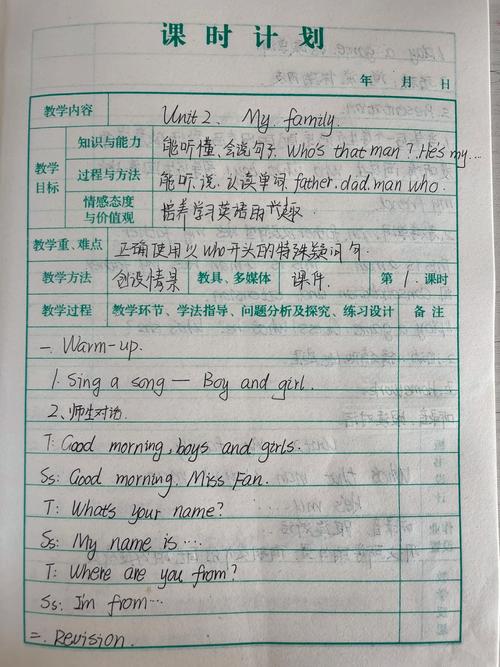
课题: Unit 4 Where is my car? (Period 1)
年级: 小学三年级下册
课时: 第1课时 (40分钟)
(图片来源网络,侵删)
教学目标:
- 知识与技能:
- 能听、说、认读单词
in, on, under。 - 能听懂、会说、会读句型
Where is...? It's in/on/under the...。 - 能初步运用句型描述物品的位置。
- 能听、说、认读单词
- 过程与方法:
- 通过TPR游戏、实物演示和情景创设,让学生在活动中感知和理解方位介词。
- 通过Pair work,让学生在合作中操练和运用新句型。
- 情感态度与价值观:
- 通过寻找物品的游戏,培养学生细心观察和积极思考的习惯。
- 在活动中体验学习英语的乐趣,敢于开口表达。
教学重难点:
- 重点: 掌握三个方位介词
in, on, under的含义和用法。 - 难点: 灵活运用
Where is...? It's in/on/under...句型进行问答。
教学准备:
- 多媒体课件,包含图片、动画和音频。
- 实物:一个盒子,一个球,一本书,一个玩具汽车。
- 单词卡片
in, on, under。 - 学生每人一张练习纸,画有一个房间和几个物品。
教学过程:
| 环节 | 时间 | 活动设计 | 设计意图 | |
|---|---|---|---|---|
| Step 1: Warm-up & Review | 5 mins | Greetings. Sing a song: "Hello" or "Head, Shoulders, Knees and Toes". |
Teacher and students greet each other. Play the song and ask students to sing and do the actions. |
营造轻松愉快的课堂氛围,激活学生已有的知识储备,快速进入英语学习状态。 |
| Step 2: Presentation | 15 mins | Introduce in:Introduce on:Introduce under:Introduce the sentence pattern: |
Show a box and a ball. T: Look, what's this? (Ss: A box.) T: Where is the ball? (Put the ball in the box.) It's in the box. Read and have students repeat. Show pictures with "in". Put the ball on the box. T: Where is the ball now? It's on the box. Read and repeat. Show pictures with "on". Put the ball under the box. T: Where is the ball now? It's under the box. Read and repeat. Show pictures with "under". Ask a question. T: (Pointing to the ball in the box) Where is the ball? Let me ask. Where is the ball? (Write on the PPT). Read the question. Answer: It's in the box. (Write the answer on the PPT). |
通过实物演示,直观、形象地展示方位介词的含义,符合三年级学生的认知特点。 将新词融入句型中整体呈现,让学生在语境中学习,而不是孤立地记单词。 TPR活动能帮助学生加深记忆,调动多种感官参与学习。 |
| Step 3: Practice | 12 mins | Game: "Simon Says" Game: "Find and Say" Pair Work |
T: Simon says, put your pencil in your desk. Simon says, put your book on your head. ... (Without "Simon says" is invalid). Hide a toy car somewhere in the classroom. T: Where is my car? Is it in the desk? (Ss: No.) Is it on the chair? ... Guide students to ask: "Where is the car?" The one who finds it answers: "It's in/on/under the..." Show a picture of a messy room. T: Look at this room. The toy car is in the box. The book is on the desk. Now, work with your partner. Ask and answer about the picture. (e.g., S1: Where is the pen? S2: It's under the book.) |
在游戏中巩固新词,既有趣又有效。 创设真实寻找的情景,激发学生的好奇心和参与度,在互动中运用语言。 通过Pair work,让每个学生都有开口说英语的机会,培养合作精神和语言运用能力。 |
| Step 4: Production | 6 mins | Draw and Say | Distribute the worksheet. T: Draw a ball, a book, and a pencil on your paper. Then, draw them in different places. For example, the ball is in the box, the book is on the desk, and the pencil is under the chair. Finally, work with your partner and talk about your picture. | 这是一个开放性的产出活动,鼓励学生创造性地运用所学知识,将语言学习和动手实践结合起来,巩固学习成果。 |
| Step 5: Summary & Homework | 2 mins | Summary Homework |
T: Today we learned three new words: in, on, under. And we learned how to ask about things. (Ask students to repeat the key sentence pattern).Homework: a. Listen and repeat "Let's learn" part for 3 times. b. Draw a picture of your bedroom and describe 3 things in it using "in, on, under". |
总结本课重点,帮助学生梳理知识脉络。 作业设计分层,既有巩固性作业,又有拓展性作业,联系学生生活实际,让英语学习延伸到课外。 |
板书设计:
                      Unit 4 Where is my car?
        (贴一张桌子、一个盒子的简笔画)
in      on      under
        (把一个球的图片分别贴在盒子里面、桌子上面、盒子下面)
Where is the ball?
It's in the box.
It's on the desk.
It's under the box.
教学建议
- 趣味性第一: 三年级学生注意力集中的时间短,必须将游戏、歌曲、故事、竞赛等元素贯穿课堂始终。
- 多感官输入: 充分利用实物、图片、卡片、动画、肢体语言(TPR)等,让学生看、听、说、动,全方位地感知语言。
- 创设真实语境: 尽量将单词和句型放入学生熟悉的生活情景中进行教学,如购物、问路、介绍家人等,让学生知道“学了这个有什么用”。
- 鼓励开口,允许犯错: 对于初学者,最重要的是“敢说”,要多表扬、多鼓励,对发音或语法上的小错误要宽容,先肯定其表达的意愿。
- 善用小组合作: Pair work 和 group work 是让每个学生都参与进来的有效方式,能减少学生的焦虑感,同时培养合作能力。
- 及时复习: 遵循“艾宾浩斯遗忘曲线”,每节课前用3-5分钟复习旧知,单元结束时进行系统复习,帮助学生巩固记忆。