下面我将从一个标准的教材(例如人教版PEP、外研版等)出发,为你分解这个单元的重点、难点和学习建议。
(图片来源网络,侵删)
第一单元:主题与核心内容
常见主题:
- How Do You Spend Your Weekends? (你如何度过周末?)
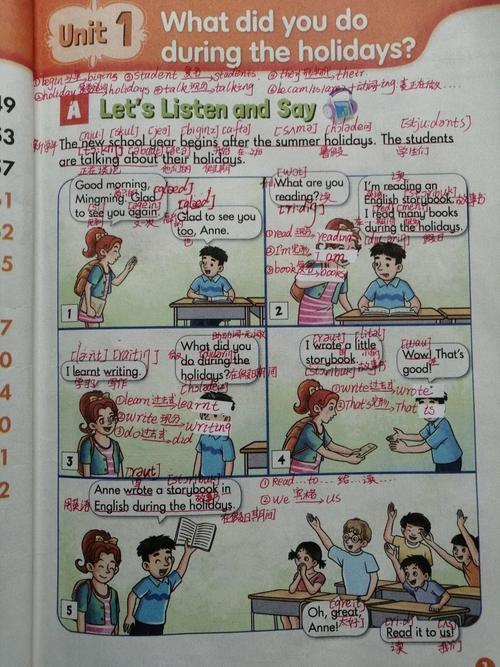
- What Did You Do Last Weekend? (你上周末做了什么?)
这个单元的核心是学习如何描述自己过去某个时间(尤其是上周末、昨天等)的活动,并引入了 一般过去时 的概念。
核心词汇
词汇是基础,通常分为两类:
关于活动的动词 这是最重要的部分,需要掌握它们的 原形 和 过去式 形式。
(图片来源网络,侵删)
| 原形 | 过去式 | 中文意思 |
|---|---|---|
watch |
watched |
看(电视、比赛) |
clean |
cleaned |
打扫(房间) |
wash |
washed |
洗(衣服、碗) |
play |
played |
玩、踢(球) |
visit |
visited |
拜访、参观 |
do |
did |
做(家务、作业) |
go |
went |
去 |
are/were |
were |
是 (be动词的过去式) |
have |
had |
吃、有 |
read |
read |
阅读 (读音同 /red/) |
关于时间的词汇 这些词汇用来明确动作发生的时间。
yesterday(昨天)last weekend(上周末)last night(昨晚)last Monday(上周一)the day before yesterday(前天)this morning/afternoon/evening(今天早上/下午/晚上)just now(刚才)
核心句型与语法
核心句型:询问过去做了什么
-
问句:
What did you do + 时间?What did you do last weekend?(你上周末做了什么?)What did you do yesterday?(你昨天做了什么?)- 注意: 助动词
did后面的动词必须用 原形。
-
答句:
I + 动词过去式 + ...I watched TV.(我看了电视。)I cleaned my room.(我打扫了我的房间。)I played football with my friends.(我和朋友们踢了足球。)
核心语法:一般过去时
这是六年级英语的第一个语法重点,需要理解并掌握。
- 定义: 表示在过去某个时间发生的动作或存在的状态。
- 构成:
- be动词:
was/were- 肯定句:
I was at home.He/She was happy.We/They were at school. - 否定句:
I was not (wasn't) at home.He/She wasn't happy. - 一般疑问句:
Were you at home?Was he/she happy?
- 肯定句:
- 实义动词:
- 规则动词: 一般在动词末尾加
-ed。clean->cleaned(直接加)play->played(辅音+y结尾,变y为i再加ed)stop->stopped(重读闭音节,双写末尾辅音再加ed)
- 不规则动词: 需要单独记忆,如上面的
go-went,do-did,have-had等。
- 规则动词: 一般在动词末尾加
- be动词:
- 否定句和疑问句:
- 否定句:
主语 + didn't + 动词原形 + ...I didn't watch TV.(我没看电视。)He didn't do his homework.(他没做作业。)
- 疑问句:
Did + 主语 + 动词原形 + ...?Did you clean your room?(你打扫房间了吗?)Did he go to the park?(他去公园了吗?)
- 否定句:
对话与范文示例
对话示例:
A: Hi, Lucy! What did you do last weekend? B: Hi, Tom! I visited my grandparents on Saturday. A: Oh, nice! What did you do on Sunday? B: On Sunday, I cleaned my room and did my homework in the morning. In the afternoon, I played basketball with my friend, Mike. A: It sounds like a busy weekend! B: Yes, but it was fun! What about you? A: I stayed at home. I watched some cartoons and read a book.
常见错误与易错点
- 动词形式错误: 在
did后面使用动词的过去式。- 错误:
What did you **watched** TV? - 正确:
What did you **watch** TV?(did 是助动词,后面跟动词原形)
- 错误:
- be动词的过去式混淆:
was和were的使用。I was.../He/She/It was...You/We/They were...
- 不规则动词记忆不牢: 容易把
go写成goed,do写成doed。 - 时间状语使用不当: 句子中有时态混乱。
- 错误:
Yesterday I **play** football.(昨天我踢了足球。) - 正确:
Yesterday I **played** football.
- 错误:
学习建议
- 词汇为王,反复记忆: 制作单词卡片,正面写原形,背面写过去式和中文,每天抽空背诵和默写。
- 理解语法,多做练习: 理解
did和was/were的作用,通过大量的句子填空、改写练习来巩固。 - 开口说,动手写:
- 口语: 尝试用英语和同学或家人讨论自己的周末活动。"What did you do last night? I did my homework."
- 写作: 写一篇简短的日记,记录自己昨天或上周末的活动。
Yesterday was Sunday. In the morning, I read a book. In the afternoon, I played ping-pong with my father. It was a happy day.
- 情景化学习: 不要孤立地记单词和句型,想象一个具体的场景(比如问好朋友周末做了什么),把学到的知识用进去。
- 利用资源: 可以看一些简单的英文动画片(如《小猪佩奇》Peppa Pig,其中很多对话都用过去时描述),听英文儿歌,在真实语境中感受语言。
希望这份详细的梳理能帮助你更好地掌握小学六年级英语第一单元的内容!祝你学习进步!